

Group Psychology – The invisible Cage
The Invisible Cage: Why You Feel Anxious, Angry, and Alone—And Who Profits From It, How the systems shaping your daily news feed may be engineering the very emotions you can’t explain
- Consider a typical day during Covid lockdowns: You wake up. Check your phone. Something terrible has happened somewhere—again. Your chest tightens, not because the threat is immediate, but because the world feels wrong, unstable, unpredictable. You can’t name exactly what’s wrong. You just know you’re worried, exhausted, and weirdly angry at people you’ve never met.
- You used to disagree with friends. Now you don’t talk to them. The issues feel too big, too urgent. Everyone seems certain about everything except you. You scroll for answers, but the answers all point the same direction: be afraid, trust the experts, don’t ask too many questions.
- If this feels familiar, you’re not broken. You’re not imagining things. And you’re definitely not alone—though that last part is exactly the problem.
- What follows is an investigation into something most people sense but can’t articulate: the machinery behind the modern anxiety epidemic. Not merely a conspiracy of shadowy figures in rooms, but something arguably more powerful—a system that learned how to turn your natural need for belonging and safety into a product. A system that doesn’t need to force your compliance because it can manufacture your consent from the inside out, this has a name military grade Psyops developed by the CIA but also by other countries like Russia, China to control populations.
- This isn’t about left or right. It’s not about any single issue. It’s about the architecture of how we come to believe what we believe, fear what we fear, and hate who we’re told to hate—while convinced we’re thinking for ourselves.
- If you’ve ever wondered why intelligent people you know suddenly seem incapable of seeing obvious facts, or why you feel strangely isolated despite being constantly “connected,” what follows may explain more than you’re comfortable knowing.
- Understanding the cage is the first step toward walking out of it.
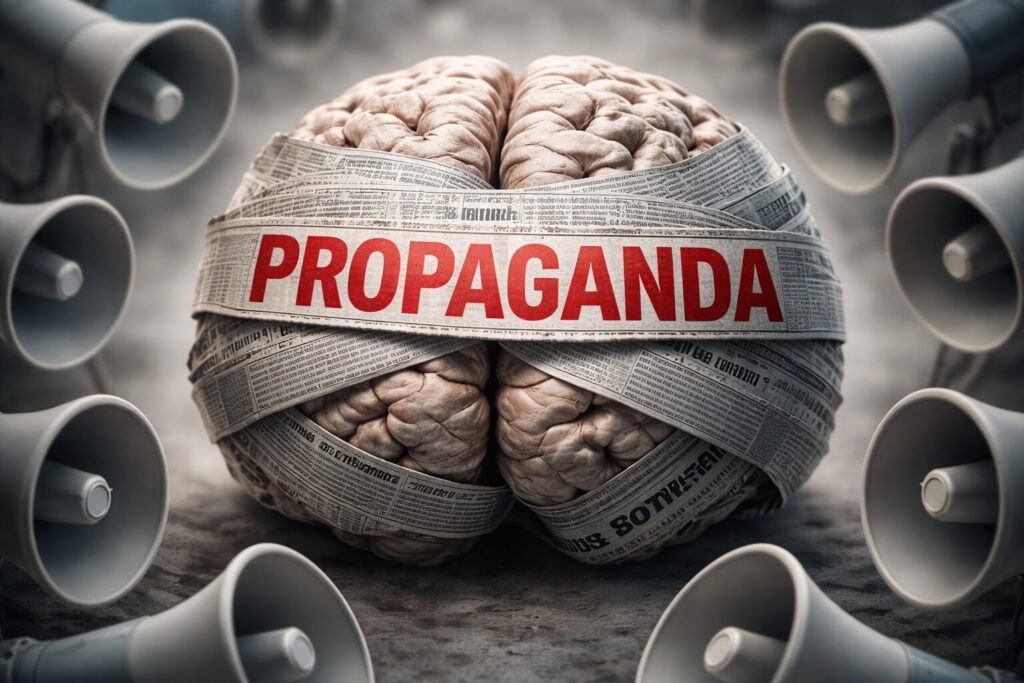
The Architecture of Consent: How Modern Systems Engineer Psychological Compliance.
An exploration of the evolution of influence from Cold War psyops to algorithmic governance
In an era where totalitarianism no longer arrives in tanks but through trending topics, a growing body of research suggests we are witnessing something unprecedented: the industrialization of collective psychology itself.
- The concept, explored by psychologist Dr. Mattias Desmet in his work on the psychology of totalitarianism, describes a phenomenon he calls “mass formation”—a form of collective hypnosis that emerges when specific social conditions converge. But contemporary analysts argue this psychological state is no longer merely a societal accident waiting to happen. Instead, they suggest, it has become the deliberate end-product of systems refined over decades.
The Four Conditions of Compliance
- Mass formation requires four preconditions: widespread social isolation, a perceived lack of meaning in life, free-floating anxiety without clear cause, and pent-up frustration seeking an outlet. When these elements saturate a population, a narrative offering both an object of anxiety and a strategy to address it can trigger a kind of group trance.
- In this state, roughly 20–30% of the population enters what researchers describe as a “fanatical” condition—characterized by intense solidarity, intolerance of dissent, and a willingness to surrender freedoms for the promised resolution of anxiety. The remaining population typically fragments into a passive majority that acquiesces and a small minority that resists.
- What makes this theory particularly resonant today is the argument that these conditions are not simply occurring organically in modern society—they are being systematically cultivated.
From Mockingbird to Algorithm
- The CIA’s Operation Mockingbird, the Cold War-era program that embedded influence within major media outlets. While such operations once required direct human handlers and physical infrastructure, today’s systems operate through more diffuse mechanisms.
- Media scholars point to the 2012 Smith-Mundt Modernization Act, which removed domestic prohibitions on propaganda techniques previously restricted to foreign audiences, as a pivotal legal shift. Combined with the rise of algorithmic content distribution, this has created what some analysts term “decentralized psychological operations”—where coordination happens through platform architecture rather than covert meetings.
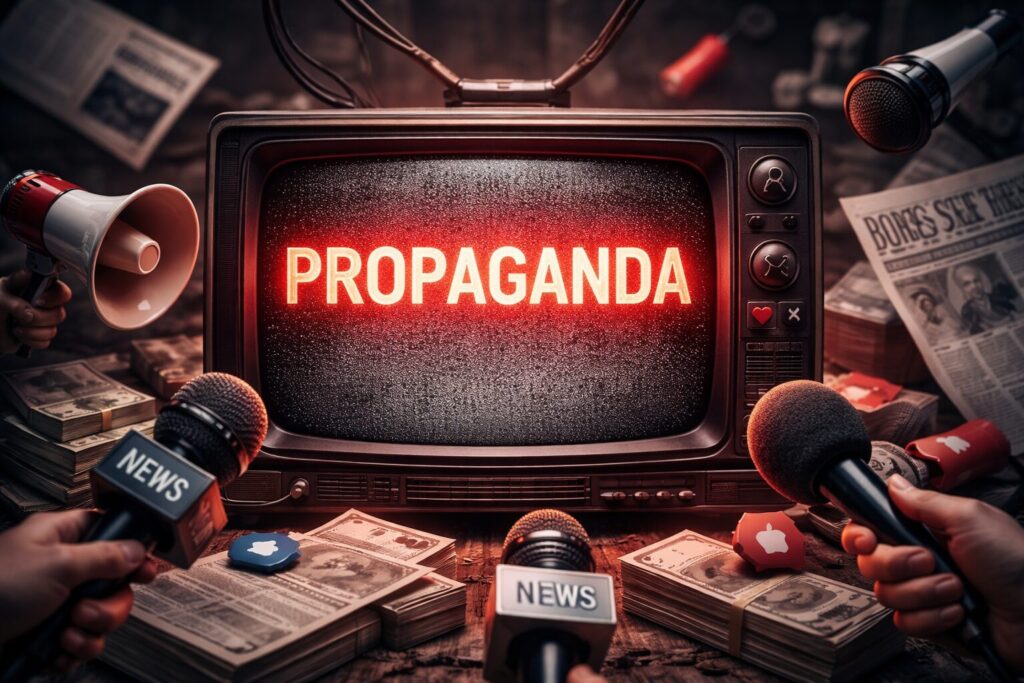
- The mechanism functions through several reinforcing channels:
- Crisis Cycling: Rather than episodic fear campaigns, modern information environments maintain chronic anxiety through rotating narratives—health emergencies, climate catastrophes, security threats—each refreshing the psychological conditions that make populations receptive to authority.
- Algorithmic Hypnosis: Social media platforms use behavioral data to create personalized reality tunnels, accelerating the “resonance” that makes unified narratives feel like personal insight. Content is micro-targeted based on psychographic profiles, exploiting loneliness with simulated belonging and frustration with directed outrage.
- Synthetic Consensus: Coordinated amplification through automated accounts and engagement algorithms creates the illusion of overwhelming agreement, pulling passive observers into the perceived majority position.
The Self-Policing Society
- Perhaps the most significant evolution is the shift from external enforcement to internalized compliance. When populations enter mass formation states, they typically begin policing themselves—reporting deviations, shaming dissent, and cutting social ties with non-conformists.
- This represents what researchers call “soft totalitarianism”: a system where control is maintained not through secret police but through social pressure, where the population participates in its own psychological management. The isolation of dissenters further feeds the cycle, pushing more individuals toward the safety of the dominant narrative.
Artificial Intelligence: The Accelerant
- The next phase, currently emerging in military and strategic analyses, involves artificial intelligence as a force multiplier for these dynamics. Unlike human-coordinated campaigns, AI systems can:
- Predict vulnerability: Behavioral models identify who is susceptible to specific narrative shifts before they occur
- Generate personalized content: Large language models create tailored messaging that resonates with individual psychological profiles
- Maintain autonomous feedback loops: Systems learn in real-time what sustains compliance states and optimize accordingly
- Recent NATO and military analyses refer to this as “cognitive domain warfare”—operations targeting not territory or infrastructure, but perception, interpretation, and decision-making itself.
The Question of Agency
- A critical tension in this analysis concerns the role of leadership. Desmet argues that in genuine mass formation, leaders often become caught in the same psychological currents as the led—believing their own narratives, trapped in the trance they help create. This makes the system particularly stable, as there is no puppet master to expose, only true believers defending what they perceive as reality.
- Critics of this view suggest it underestimates deliberate coordination among institutional actors. Proponents counter that the genius of modern systems is precisely this ambiguity—whether leaders are hypnotized or hypnotists becomes irrelevant when the machinery functions regardless.
Breaking the Loop
- The implied response, drawn from Desmet’s work, centers on individual and collective resistance to the preconditions themselves: maintaining genuine human connection outside digital platforms, cultivating sources of meaning independent of tribal narratives, and preserving the capacity for ethical reasoning even when it contradicts social consensus.
- Whether such resistance can scale to match the sophistication of the systems described remains an open question—one likely to define the coming decades of democratic governance.
This analysis synthesizes research from clinical psychology, media studies, and intelligence history to examine emerging patterns in collective behavior and institutional influence.